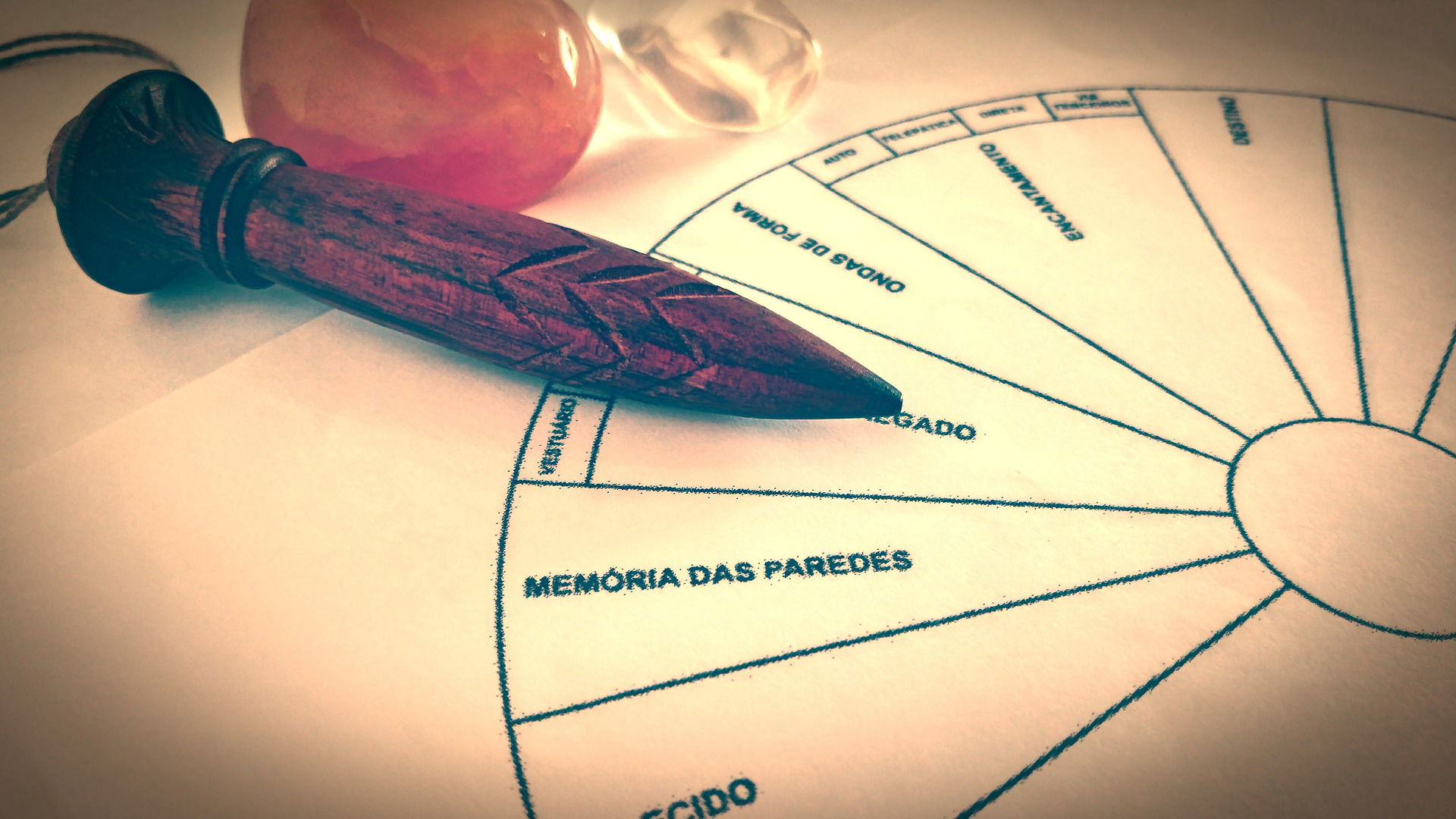
When Achille Desbuquoit invented the word Geobiology in 1933, he did not think that it would evolve in all directions and have an evolution worthy of the greatest Sciences.
Initially, Father Achille conceived of his "Geobiology" simply as an extension of radiesthesia. He was, in fact, a member of the renowned Association of Friends of Radiesthesia, founded by Abbé Mermet and Abbé Boudet. For some years already, prominent members of this Association had observed the influence of the subsoil on the health of human beings, as well as on animals and plants. In those days, radiesthesia was considered a science and was practiced by many Church Fathers. It was within this context that Reverend Father Desbuquoit trained, and through his interactions with other enthusiasts, he focused on the relationship between radiesthesia and the well-being of his community. Working with various patients for whom conventional medicine had found no solutions, he began analyzing their living spaces and identifying a connection between invisible radiation from the subsoil (detectable by dowsing) and some of their illnesses. By proposing simple solutions (such as moving beds or changing the patient's position), some illnesses disappeared as if by magic, even receiving confirmation from several doctors... Thus, the applications of a new approach to health were born!
Indeed, completely denying the possibility that the environment can influence our health means missing out on a number of parameters that can explain abnormal health problems or, more broadly, problems of well-being among the inhabitants.
Denying or failing to question the influence of the environment is, in fact, what many healthcare practitioners often do. They assume that everything stems from immunity without considering what can weaken it.
It is to this broader vision that Geobiology has opened itself: A person's well-being at home is a key factor in their balance, and a draining or stressful home will not allow a sick person to recover their well-being as quickly as someone in a balanced home! This is also confirmed by Eastern traditions related to housing, such as Feng Shui and Vaastu Shastra!
While Geobiology initially incorporated only the dowsing approach to determine the quality of a place, it now has a broader vision, which in some areas corresponds to a specialization among certain practitioners. The following areas can be cited among the factors studied by a Geobiologist:
- The impact of materials... (on air quality, on the atmosphere, on light, etc.)
- The impact of electromagnetic pollution (in the home itself or in the wider environment linked to relay antennas, radars, telephone poles, etc.)
- The impact of Geology (soil type, faults, underground watercourses, underground cavities...)
- Telluric and geomagnetic veins (Hartmann network, Cury network, etc.)
- The flow of energy in the home (Feng Shui or Vaastu approach)
- The impact of colours and shapes (associated with the design of the home)
- The imprint of the place's history (memories, entities...)